Tile roofs · central Arizona · since 2019
Before the quote, a survey of your roof.
We climb up, measure the A roof plane is one of the sloped faces that shed the rain. A simple gable roof has two, and usually only one of them gets sun all day. that gets the sun, and put in writing how many panels fit up there.
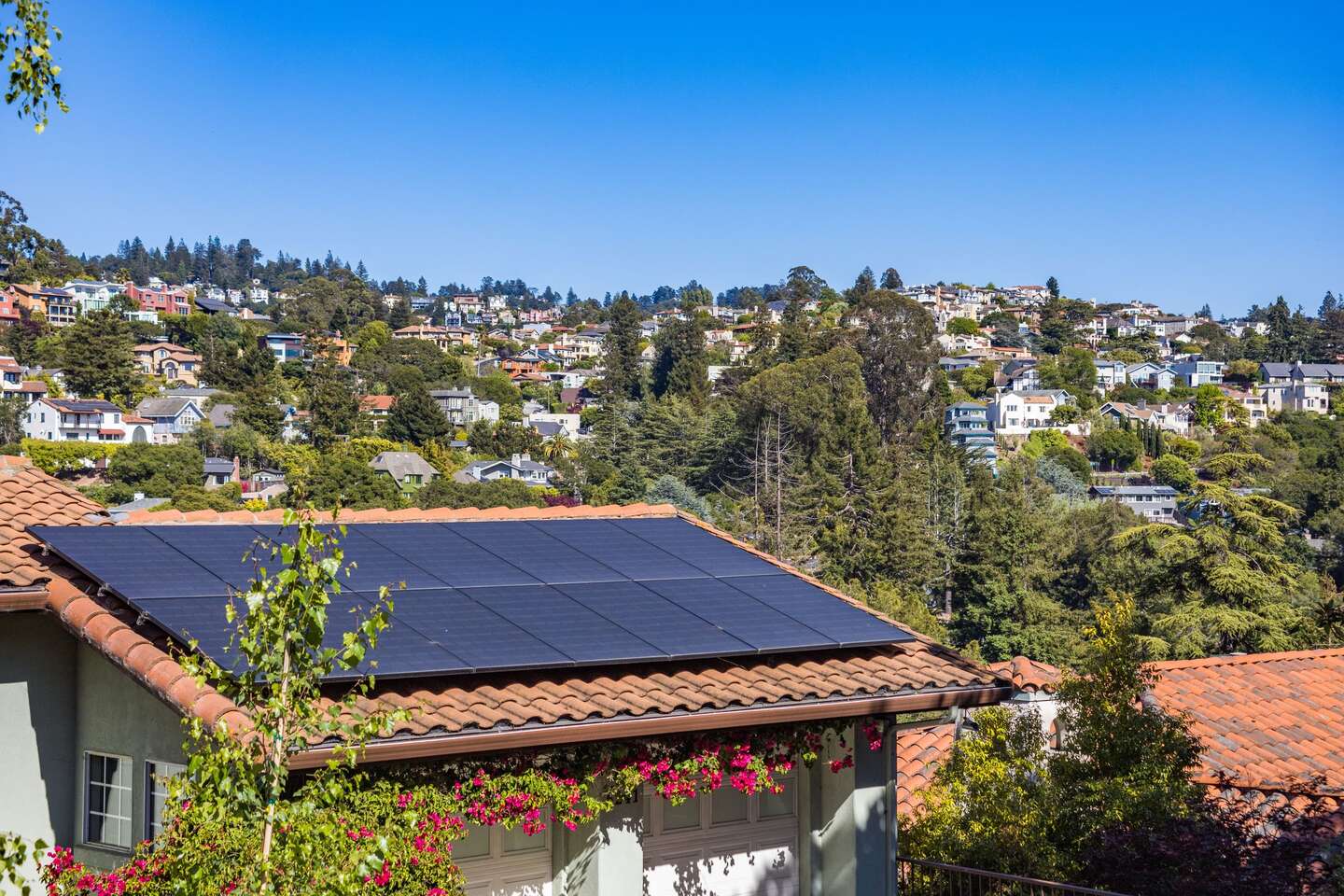
Reference photo from Pexels, under the site license. Clay tile and a hillside neighborhood; the house isn't in Arizona, and it's here for the framing of the array on the plane.
Part 0
What the survey puts in writing
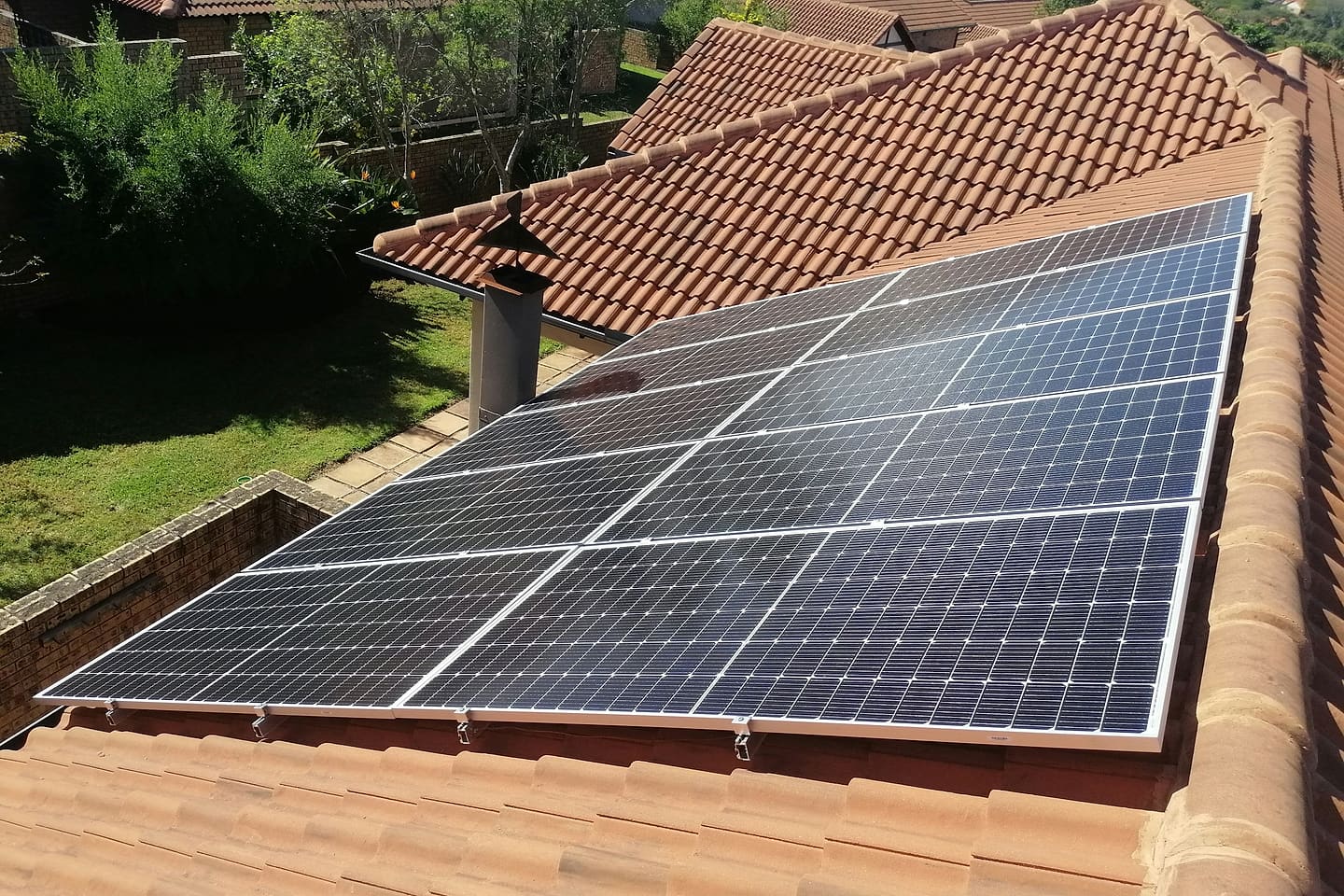
- system size
- 8.2 kW
- plane used
- 410 sq ft
- estimated output
- 1,150 to 1,300 kWh/mo
- pitch and facing
- 18° · south
19 panels of 430 W
of 480 sq ft free, at 50 sq ft per kW
our math: 140 to 160 kWh per kW
measured with an inclinometer on the roof
Ridgeline in numbers
-
1,284
roofs connected
across central Arizona, through July 31, 2026
-
9,870 MWh
generated and metered
the sum of those roofs' inverters since March 2019
-
22
towns served
within 75 miles of Phoenix
-
19 days
from survey to permission to operate
median of the last 40 projects, not counting the utility queue
We don't convert that generation into carbon avoided. The conversion depends on the grid's average emission factor, which changes and is published by the EPA in eGRID. Anyone who wants the math can take the factor and the MWh above.
Part 1
The roof decides almost everything
Two houses on the same street, with the same power bill, take different systems. What changes is the plane available, where it points, and what passes over it during the day. That's why the first visit is measurement — the quote comes after.
- the facing The south-facing plane gets sun all day. East and west work at a loss, and each case's loss is project math, not a rule of thumb.
- the pitch The NREL figures we use are for tilted planes. A nearly flat roof collects dirt and needs cleaning more often.
- the shade Power pole, antenna, rooftop AC unit, chimney, the neighbor's tree. Partial shade on one panel drags down the whole string wired with it, and that only gets measured up on the roof.
- the tile A cracked tile or termite-damaged framing goes to repair before the array does. Once the panels are up, roof work costs a tear-down.
- the area With 2026 modules, each kW takes about 50 sq ft of plane. An 8 kW system wants 400 sq ft free, not counting the edge setbacks.
- the rate plan Your utility's fixed charges and export rate decide what keeps arriving on the bill every month after the panels are up.
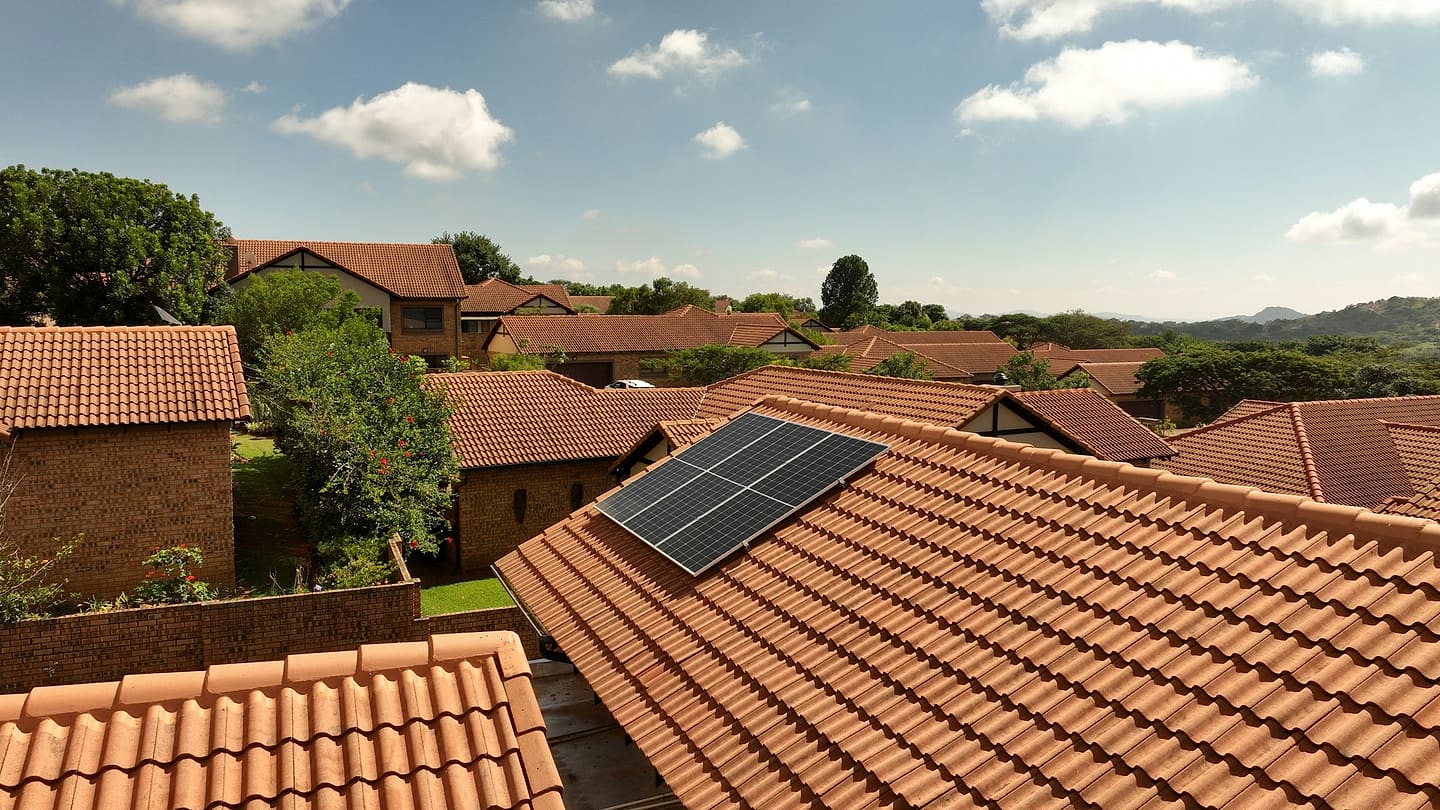
How much sun arrives, per day, on a tilted plane
In kWh per m² per day, yearly average, from NREL's National Solar Radiation Database. Flagstaff is the coolest useful point in the state and still gets 6.0. The World Bank's Global Solar Atlas diverges about 3% for Phoenix: different satellites, different series.
Part 2
The bill, split apart
Type what you pay for power each month. The bar splits into what generation takes off the bill, the The utility credits each kWh you send to the grid at an export rate set below the retail rate you buy at. The gap between the two is value your generation earns but doesn't keep — and it widens for each new year of connections. on the energy you trade with the grid, and the Service, meter and grid charges billed every month regardless of usage. No solar credit touches them., which arrive every month even with the roof full of panels. Nothing is sent anywhere — the math runs right here.
With $122 less per month, the roof pays for itself in 13 to 15 years.
- today
- 4 yrs
- 8
- 12
- 16
- 20
The same bar turned into time: how many years of savings pay for the system. The mark is the payback at our central estimate.
- what generation takes off the bill $122 1,060 kWh offset
- the export gap on energy traded with the grid $37 our estimate of 3.5¢ per kWh generated
- fixed charges, which never leave $17 service and meter charges, on every bill
- usage the generation doesn't cover $4 generation leaves 27 kWh of the month uncovered
The premises behind this math, one by one
- A rate of $0.15 per kWh. The EIA puts Arizona's residential average near 14.5¢ in 2025. With taxes and fees the effective rate runs 14 to 16¢ depending on the plan, and the 15¢ is our estimate.
- Generation of 145 kWh per kW per month. Our math, from about 1,750 kWh per kW per year in Phoenix out of PVWatts, at 75% overall performance. The range we use for payback runs 130 to 160.
- An export gap of 3.5¢ per kWh generated, and this is our estimate. Roughly half of what a home system makes is used on the spot at the retail rate; the other half goes to the grid and is credited at an export rate near 7.7¢. The blended loss against retail comes to about 3.5¢ on every kWh generated. We err on the heavy side: your bill tends to come out better than this math shows, not worse.
- Fixed charges of $17 a month. Service and meter charges, billed regardless of usage. No solar credit touches them.
- Price per watt from 2025 market-quote data. About $3.00 per watt at 4 kW, $2.60 at 8 kW and $2.40 at 12 kW, before any incentive, and we interpolate between those three points. Below 4 kW we hold the 4 kW price, which is the smallest size with published data — in practice price per watt rises on small systems, so in that range our math is optimistic.
- Sales tax and local fees stay on the bill and aren't in the math above, because each city and plan sets its own.
Part 3
What you're actually buying
Everyone selling solar talks power, warranty and savings. All three words come with fine print, and the fine print is what separates an honest quote from a pretty spreadsheet.
| rated kW | The sum of the panels' nameplates, in DC and in a lab. What reaches the house goes through the inverter, which has its own efficiency of about 96%. |
|---|---|
| product warranty | 25 years on 2026 residential datasheets. It covers manufacturing defects in the panel — not the installation and not the inverter, which carry separate warranties. |
| power warranty | 25 years, with about 92% of original output in year 25 per the datasheet. It's a contracted curve, verified by test. |
| real degradation | NREL measured about 2,000 field rates and found a median of 0.5% a year for crystalline silicon. Over 20 years that's roughly 10% of output. |
| system losses | Dirt, shading, panel mismatch, wiring, connections and downtime add up to 14% per NREL's PVWatts table. The inverter sits outside that 14% and temperature is computed separately. We work with 75% overall performance. |
| price per watt | Falls as the system grows: about $3.00 per watt at 4 kW and $2.40 at 12 kW in 2025 quote data. Small systems cost more per watt because labor and permitting don't shrink with them. |
Part 4
The new rules, without the scare and without the gloss
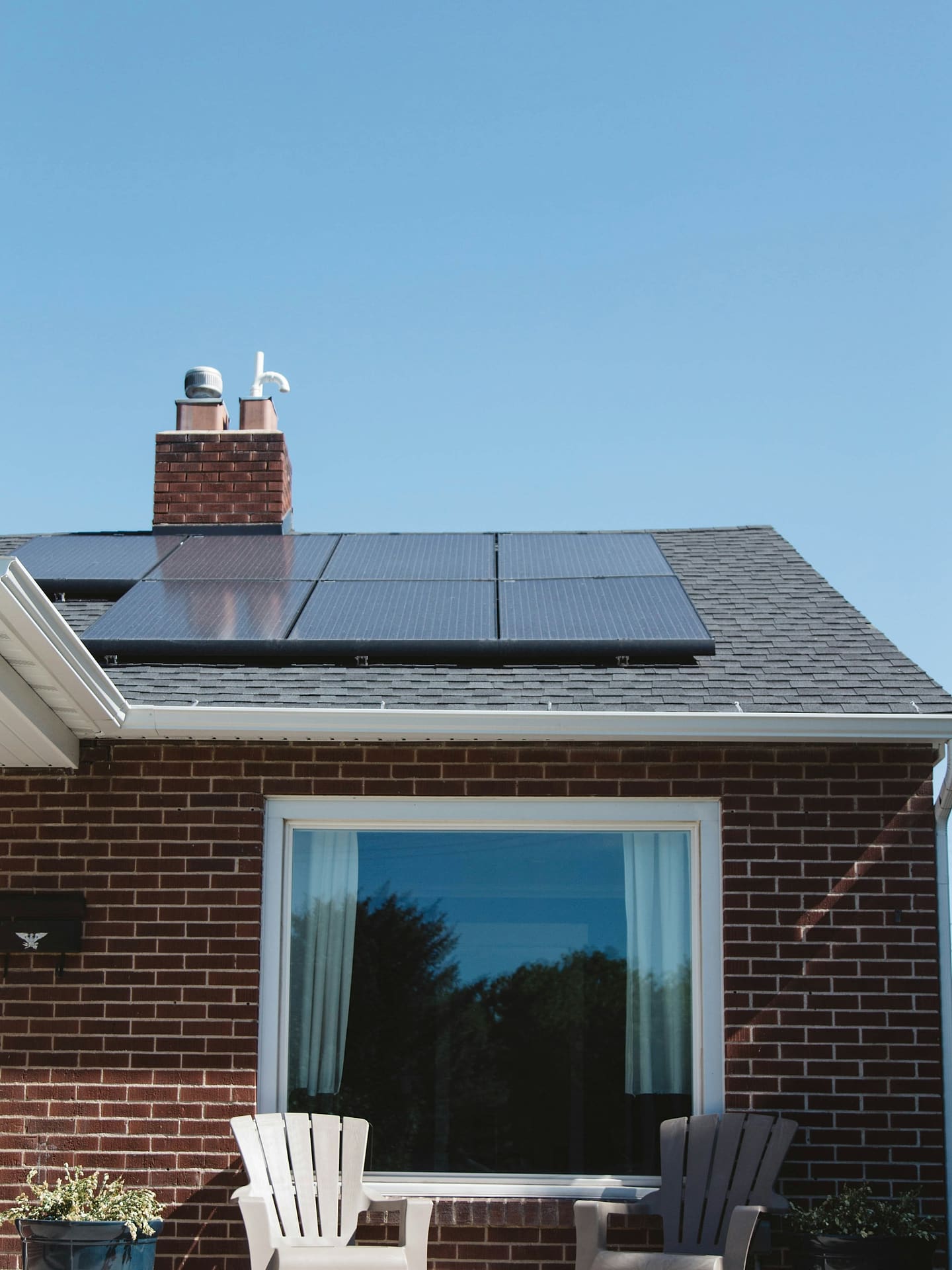
Until a few years ago most utilities credited every exported kWh at the full retail rate — that was net metering. Its successors credit exports at a separate rate, set lower and stepping down for each new year of connections. The schedule below is the one this page's example utility publishes.
- 202310.5¢
- 20249.4¢
- 20258.5¢
- 20267.7¢
- 20276.9¢
- 20286.2¢
- 2029to be set
Export rate paid per kWh sent to the grid, by the year a system connects. The rate you connect at is locked for ten years; each new vintage steps down about 10%. From 2029 on, no schedule has been published — anyone quoting a 2029 number is guessing.
-
Connect now, keep the rate
Once your system is approved to operate, its export rate is locked for ten years, whatever later vintages pay. The lock survives a sale of the house on most schedules — but not an upgrade: added capacity earns the rate of the year it's added.
-
The federal tax credit is gone for purchases
The 30% residential credit — Section 25D — ended for expenditures after December 31, 2025. Leased and third-party-owned systems still route a separate credit through the installer, and that credit is the fine print behind most "free solar" calls. Our purchase quotes carry no credit, and say so.
-
Payback got longer, and the math still closes
With retail near 15¢ and exports near 7.7¢, our central estimate for a mid-size roof runs about 13 years, in a range of 11 to 15 — against panels warranted for 25. The number for your house comes out of the survey, not out of this page.
Before you sign
Five cases where we tell you not to do it
- shade sitting on the roof A big tree to the south, a taller building next door, an AC unit in the middle of the plane. Multi-tracker inverters exist, and so do per-panel optimizers, and both cost more to deliver less. When the shade covers part of every single day, the math doesn't close.
- only the north plane left The north face gets far less sun over the year. It can be done — the system just has to be bigger for the same output, and that pushes the payback out.
- usage concentrated at night An empty house generates all day, exports, and gets credited at the export rate — worth about half of using the power as it's made. If most of your usage lands after 6 pm, the payback stretches.
- a roof that needs work first Broken tiles, a leaky valley, termite-damaged framing. Repairing first costs one job. Repairing later costs the job plus taking the array down and putting it back.
- a bill close to the fixed charges If you pay around $40 a month, you're already close to the fixed charges, which no credit removes. There's little left for the panels to take off, and the investment takes too long to come back.
To quote
What we need to know before we climb your roof
- your city and neighborhood
- sets the sun numbers in the math, and the utility's timeline.
- three power bills
- from different months, for the average usage and your rate plan.
- the roof material
- tile, shingle, metal or flat. It changes the mounts and the price of the attachment.
- one photo of the roof
- any angle, even crooked. It shows the facing and what casts shade.
- the roof's age
- and whether it has ever leaked. Repairs come before the array.
- any plans to grow
- an EV, a heated pool, new AC. We leave space, and headroom in the inverter.
How it works from here
- 1You send the bills and the photo. We answer within one business day with a price range.
- 2A measurement visit — about two hours up on the roof. What the visit measures:
- the plane that gets the sun, and its pitch, with an inclinometer
- what shades it through the day: pole, antenna, AC unit, the neighbor's tree
- how many panels fit, and how many your power bill actually asks for
- what keeps arriving on the bill after the install, line by line
- 3A written survey, with the estimated output, the payback range, and anything that needs repair first.
- 4If you close, design, permits and the interconnection application with the utility. The install itself takes two to three days.
The measurement visit is charged, and the fee comes off the project if you close with us.
Example address. This page is a demonstration piece and Ridgeline doesn't exist.