Skip to content
AlcanceOphthalmology · Vila Mariana

Reading without glasses again takes less than an hour, one eye at a time.

Complete cataract and refractive surgery workup in Vila Mariana, São Paulo. Tests on the same day, surgery scheduled within two weeks.

90min per evaluation

The time the surgeon spends with you before any date is set. Prescription, eye pressure, retina and the measurement that sizes the lens all come out that same day.

Or call +55 (00) 0000-0000, Monday to Friday, 8 am to 7 pm.

Dr. Otávio Rangel Bastos Ophthalmologist · CRM-SP 84.226 · RQE 39.115

A white-haired man reading a book without glasses, sitting in an armchair in a light-walled room.

What we hear before any test

  • “Oncoming headlights at night turned into a smear with a halo, and daylight bothers me.”

    Cataract

  • “Without glasses, the street sign only becomes readable after I've already passed it.”

    Myopia and astigmatism

  • “My arm is no longer long enough to bring the menu into focus.”

    Presbyopia

Which case is yours?

Three reasons bring almost everyone to the operating room here. The drawing on each card shows the part of the eye being discussed.

Cross-section of the eye, with a clouded lens Line drawing. The eye seen from the side, in cross-section: the cornea is the front curve; just behind it sits the crystalline lens, hatched to show it has clouded; at the back of the eye the retina is the thicker line, and the optic nerve extends from it. cornea clouded lens retina optic nerve

Cataract

Recovery
light routine the next day; vision can take a few days to improve
What it is, in detail

The crystalline lens is the eye's natural lens. Over time it clouds and yellows: light scatters, contrast drops, and reading demands more light than before. No eye drop reverses that.

The surgery is phacoemulsification: the clouded lens comes out through an incision of about 2 mm and an artificial lens goes in folded in its place. The NHS records 20 to 45 minutes per eye, under local anesthesia — you stay awake and should feel no pain.

When both eyes have cataracts, they are operated on separate days. Here the dates sit 7 to 15 days apart: the first eye helps fine-tune the lens calculation for the second.

Where light crosses in a myopic eye Line drawing. The same eye in cross-section, with two rays of light entering through the cornea: they cross at a point before the retina and reach the back of the eye already spread apart again. cornea retina light crosses before the retina

Myopia and astigmatism

Recovery
2 to 7 days for office work, depending on the technique — the table sets the two apart
What it is, in detail

The laser flattens the curve of the cornea to the measure of your prescription. The technique changes with the thickness and shape of your cornea, and that is only decided with the topography in hand — which is why the evaluation comes before any date.

What the evaluation checks: a prescription stable for at least a year, a cornea thick enough, topography with no sign of keratoconus, and dry eye under control. Under 18, no laser is approved for LASIK.

People whose prescription is too high for the laser usually have another way out: a phakic intraocular lens or a lens exchange. Both are discussed in the same visit.

The artificial lens that takes the crystalline lens's place Line drawing. A thin-edged disc with two curved arms attached on opposite sides: light on its way to the retina passes through the disc, and the arms hold the lens where the crystalline lens used to be. the disc the light passes through the arms that hold it in place

Intraocular lens for presbyopia

Recovery
back to routine in 24 h; the brain takes a few weeks to get used to the near focus
What it is, in detail

It is the same surgery as cataract surgery, done before the cataract arrives: the crystalline lens that lost its ability to focus up close comes out, and an extended-depth-of-focus or multifocal lens goes in.

Brazil's Federal Council of Medicine recognizes the procedure as accepted practice and draws the line on who qualifies: people from age 55, with presbyopia and moderate to high hyperopia, aware of the risks and of the other options (CFM Opinion No. 2/2022).

The caveat comes from the American Academy of Ophthalmology and is mandatory: a multifocal or accommodating lens widens the range of vision and reduces the need for glasses, and some people still need correction for some distance. A multifocal lens raises the chance of seeing halos around lights at night, and anyone who drives before dawn needs to weigh that in the visit.

The two choices that change the outcome

Neither is decided by reading a page. Both are decided with your measurements on the table. What is here is what changes from one row to the next, so you arrive at the visit knowing what to ask.

The four types of intraocular lens

Lens What it corrects Glasses afterwards Halos at night
Monofocal one distance only, almost always far the reading pair stays on the table not what gets described
Toric one distance only, plus the astigmatism the reading pair stays on the table not what gets described
Extended focus a range of distances, from far to intermediate worn less often; up close it may still call for them can appear
Multifocal far and near worn less often; some people still need them reported more, and it weighs on anyone driving before dawn

American Academy of Ophthalmology, item 5 in the sources. The halo caveat is recorded for the multifocal lens; for extended focus the AAO publishes no rate, and this page does not invent one. The lens type is most of the difference between one quote and another — what changes the price is in the pricing section.

LASIK and PRK, side by side

Criterion LASIK PRK
Office work 2 days 5 to 7 days
Where the laser works under a flap lifted on the surface of the cornea directly on the surface, with the epithelium removed first
The first days less discomfort more discomfort, while the epithelium rebuilds
When it enters the conversation a cornea with thickness to spare for the flap a thinner cornea, or a surface that argues against the flap

Both use the same laser and the same prescription math; what changes is the path to the treated layer. Which one fits your case comes out of the topography and the corneal thickness, at the evaluation. Neither appears here as superior to the other: medical advertising rules forbid claiming privileged capability for a technique, and the choice belongs to the exam. Description per the American Academy of Ophthalmology.

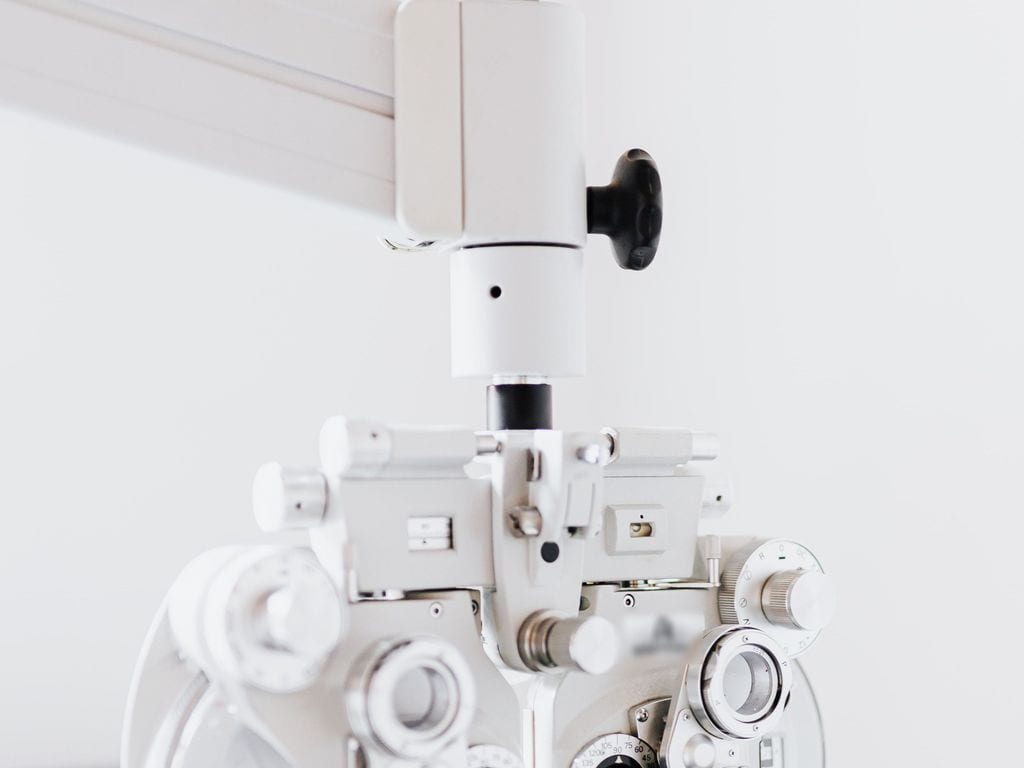
A white phoropter in an ophthalmology office, against a light wall.
Phoropter: the device that measures your prescription, lens by lens, and the first in line on evaluation day. Illustrative image.

How it works, from the first test to discharge

Five stages, each with its own timing. None of them depends on you coming back another day for a test.

  1. 90 minutes

    Evaluation

    Prescription, eye pressure, slit-lamp exam and retinal mapping, with the surgeon who will operate. The pressure is measured with anesthetic drops and normal sits between 10 and 21 mmHg. You leave the room knowing whether you have a cataract, what your prescription is, and what changes with each type of lens.

  2. same day

    Tests

    The eye measurement that sizes the lens (biometry), the corneal map (topography, which takes seconds and never touches the eye) and, when the case calls for it, a retinal scan, 5 to 10 minutes.

    The pupil takes 20 to 30 minutes to dilate and vision stays blurred for 3 to 8 hours, sometimes up to 24. Bring someone with you and don't drive back. Anyone with suspected angle-closure glaucoma is not dilated, and in that case the script changes.

  3. 20 to 45 minutes per eye

    Surgery

    Local anesthesia, no general anesthesia: you stay awake and should feel no pain. One eye at a time, on separate days. You go home the same day, about two hours later, and you cannot drive back — the pupil stays dilated and vision stays blurred.

  4. 24 hours

    First follow-up

    The next day the eye is measured again: pressure, cornea and whatever vision has already come in. Vision can take several days to improve, and it is normal for it to fluctuate at the start. This is the visit that catches any inflammation early.

  5. 30 days

    Discharge

    Eye drops for about four weeks, with the dosing schedule in writing, and two more follow-ups along the way, at 7 and at 30 days. At the last one, with the eye stabilized, the final glasses prescription comes out, if you still need any correction.

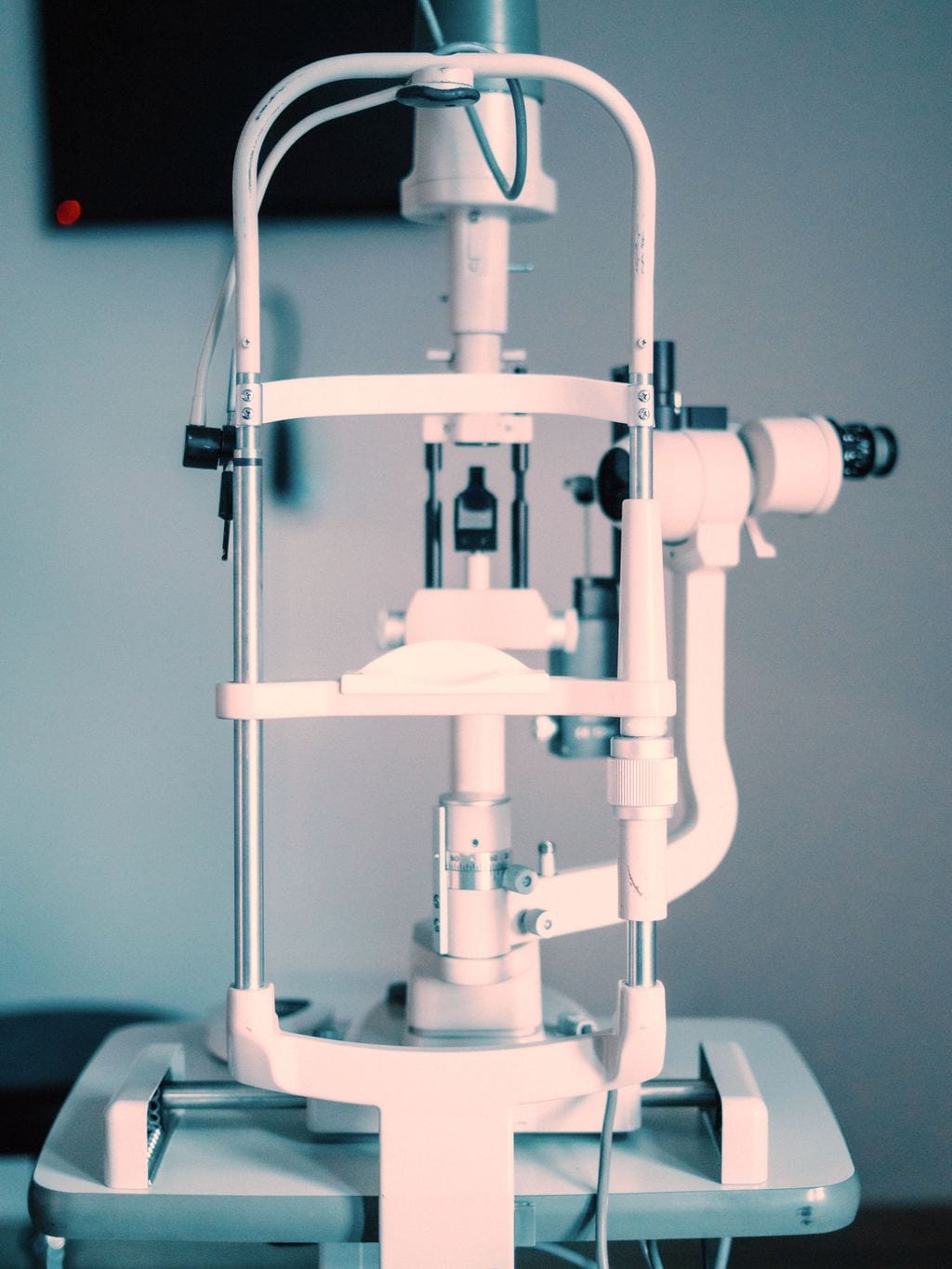
A slit lamp in an ophthalmology office, seen from the front.
Slit lamp: the device that opens the eye up in layers and shows how far the lens has clouded. Illustrative image.
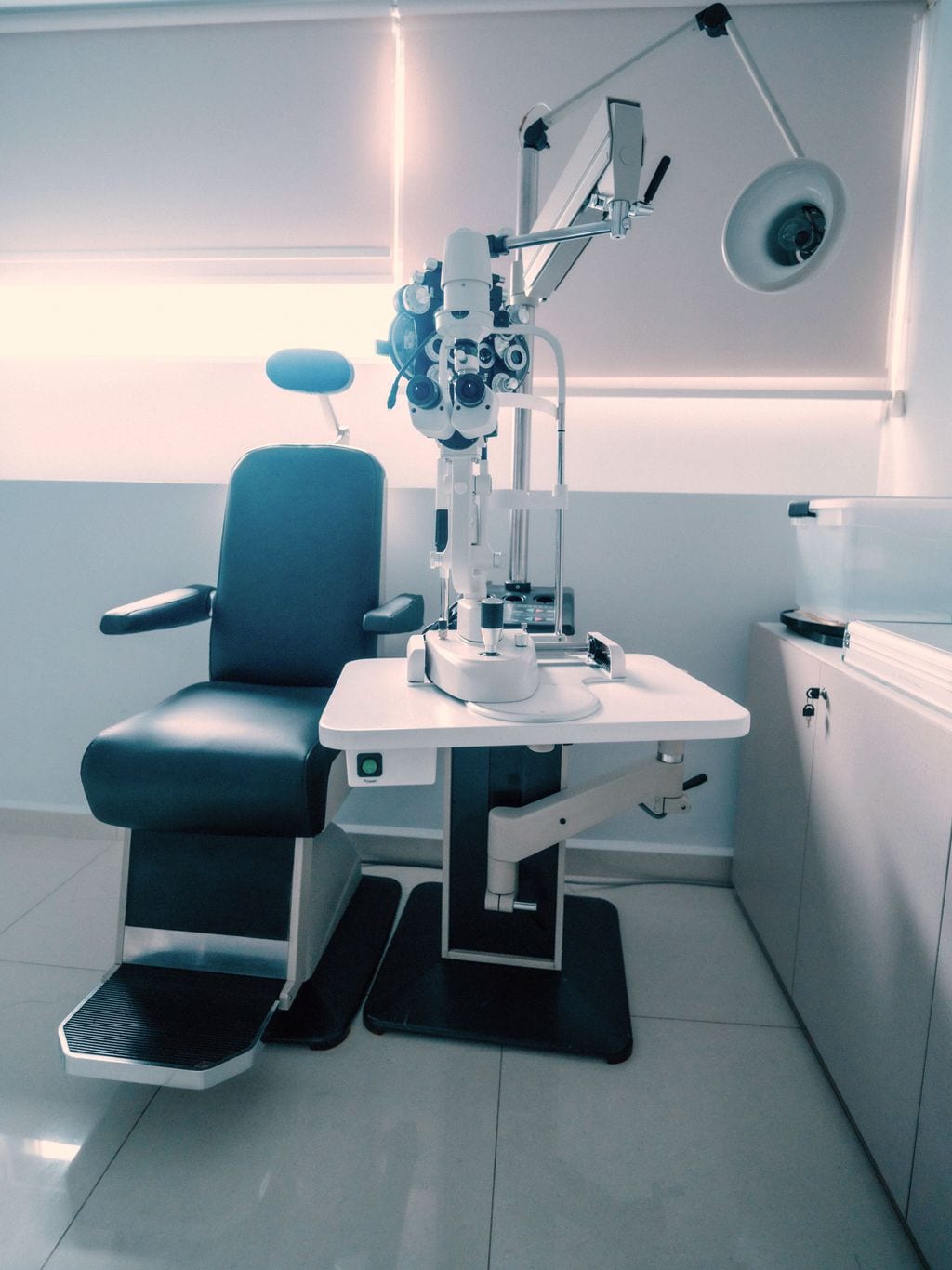
An ophthalmology exam room with an exam chair and refraction equipment.
Exam room with exam chair and phoropter. Illustrative image.

Who operates

Dr. Otávio Rangel Bastos

Ophthalmologist · CRM-SP 999.999 · RQE 99.999

Training
Medical degree in 2004; ophthalmology residency at a public university hospital in São Paulo, completed in 2008.
Specialization
A year dedicated to cataract and refractive surgery after residency, with specialist certification from the Brazilian Council of Ophthalmology.
What he operates
Phacoemulsification with intraocular lens implantation, LASIK and PRK for myopia and astigmatism, and refractive lens exchange.
Where he sees patients
Consultations and tests at the Vila Mariana clinic; surgery in the clinic's own operating suite, at the same address.

The person who does your evaluation is the person who operates. That is written here because it is the question that comes up most on the phone.

How you will see afterwards

Scroll the page. The image on top is the same photo, exported out of focus.

The same reading scene, sharp: the letters in the book have crisp edges.

With a cataract, contrast goes first: whites yellow and the edges of letters come apart.

The clouded lens comes out through a 2 mm incision. A clear lens goes in folded in its place.

Vision takes a few days to improve. At 30 days, with the eye stabilized, the final prescription comes out.

Illustrative simulation, made with the same photograph in two versions — not a patient record. Results vary from case to case.

Public reviews

4.8 of 5

612 reviews on the Google listing, accumulated since 2016.

See the Google listing

How the ratings are spread

  • 5 stars515
  • 4 stars62
  • 3 stars19
  • 2 stars9
  • 1 star7

What patients tell us

  • “I can read a medicine leaflet without a magnifier again. It took four days for my sight to settle, and the discomfort on the first day was less than I expected.”

    Neusa, 71 · Vila Mariana

  • “I had one eye done in March and the other in April. What put me at ease was the next-day visit: they measured everything again and explained what was going on.”

    Wilson, 68 · Saúde

  • “I wear glasses to read up close, as agreed before the surgery. For daytime driving I don't wear them anymore.”

    Célia, 64 · Ipiranga

The three accounts above were written for this demonstration and are not from patients. In a real clinic they would only appear with each person's written authorization — republishing a patient's words becomes the clinic's own publication, with the responsibility that comes with it. And the outcome of one surgery does not carry over to the next.

When we don't operate

The 90-minute evaluation exists to say yes or no. These are the situations where the answer is no, or not yet, and the reason for each one.

The list of contraindications for refractive surgery comes from the American Academy of Ophthalmology, and the first item on it is the conversation, before any test.

  • Expectations the surgery cannot reach. It is on the list of absolute contraindications, right beside the exam findings. If what you expect is to see like you did at 20, or never touch glasses again, the conversation comes before any date — and sometimes it ends in not operating.
  • A prescription still on the move. Changing your prescription within the last year is a sign of unstable refraction, and operating on top of that brings the prescription back months later.
  • A thin cornea, keratoconus or another ectasia. The laser removes tissue. Without enough thickness, or with a cornea already deforming, surgery makes things worse.
  • Uncontrolled glaucoma, dry eye, blepharitis or an allergy flare. All of them count as contraindications until treated. None of them is forever.
  • Uncontrolled autoimmune disease. It interferes with healing, and the decision becomes possible again once the condition stabilizes.
  • Pregnancy and breastfeeding. A relative contraindication: refraction shifts in that period, and the indication waits.
  • Under 18. No laser is approved for LASIK in that range.
  • A cataract that has already changed your vision. In that case the laser leaves the conversation, and what solves it is a lens exchange.

Three limits that enter the conversation before any date

  • Vision can take several days to improve. There is no “seeing instantly”, and fluctuation in the first weeks is expected.
  • A multifocal or accommodating lens reduces the need for glasses, and some people still need correction for some distance.
  • The optical measurement of the eye fails in 8% to 17% of cases, and a dense cataract is the most common reason. When it fails, the measurement is done by ultrasound, and that changes the margin of the lens calculation.

Price and payment

The price of the consultation is published right below. The price of the surgery cannot be, and what forbids it is a rule of Brazil's Federal Council of Medicine.

Evaluation visit · 90 minutes

$490

Includes the visit with the surgeon, refraction, eye-pressure measurement, slit-lamp exam and retinal mapping on the same day. The return visit within 30 days, to close the plan, is included.

  • If you decide to operate, the evaluation fee is deducted from the surgery quote.
  • If there is no surgical indication, the visit ends with a glasses prescription and the 30-day return, with no new charge.
  • Any test that needs repeating within the 30 days is not charged again.

Why the surgery price is not on this page

CFM Resolution No. 2,336/2023 and Brazil's Medical Advertising Manual do not allow publishing procedure prices. The rule's reasoning: every surgery is individualized and depends on the prior evaluation, so there is no prior price to advertise — the amount is agreed between the parties before surgery, and publishing it is treated as self-promotion.

In practice, your quote comes out in writing at the end of the evaluation, valid for 30 days, itemized line by line. What changes the amount from one person to another:

  • The lens type. It is most of the difference between one quote and another: monofocal focuses one distance; toric corrects astigmatism; multifocal and accommodating cover a wider range.
  • One eye or both, on separate dates.
  • Insurance with reimbursement, or private payment.
  • An extra test when the retina or the cornea calls for investigation before the date.

What the surgery includes

  • The intraocular lens chosen at the evaluation, with the manufacturer's certificate handed to you.
  • Operating room, materials and sedation, with the anesthesiologist in the room.
  • The three follow-ups of the first month: 24 hours, 7 days and 30 days.
  • The post-operative eye drops with the prescription and the dosing schedule in writing.

Insurance

The visit and the tests are covered by insurance on accredited plans, and the front desk confirms yours when you book.

For the surgery, the most common route is reimbursement: you pay and receive the paperwork with the report, procedure codes and invoice to submit to your plan. The team puts that package together at no charge.

Payment options

Card in up to 12 installments, bank transfer or cash, with a discount for paying upfront.

There is no raffle, no prize and no bundle that forces you to buy something else with it: all three practices are forbidden in medical advertising, and none of them appears here.

Questions

The eight questions that come up most at the first visit, with the answer the surgeon gives in the room.

Didn't find your question?

The front desk answers the phone from 8 am to 7 pm and handles anything about scheduling, preparation and paperwork. Clinical questions wait for the evaluation, with the surgeon and your exam on the table.

Call: +55 (00) 0000-0000
Does it hurt?

The surgery is done under local anesthesia: you stay awake and should feel no pain. During the procedure you feel pressure and see a very bright light. Afterwards, the eye tends to sting or water for a few hours, and that responds to a common painkiller. Strong pain after surgery is not expected — it is a reason to call the clinic the same day.

Will I wake up in the middle of the surgery?

You are never put to sleep. The anesthesia is local, with light sedation: you breathe on your own, hear the team and answer if someone speaks to you. General anesthesia and a breathing tube are not part of routine cataract surgery. The anesthesiologist stays in the room from start to finish, with you monitored.

How long am I off work?

Office work and screen reading: 2 to 3 days. Work with physical effort, dust, paint or water: 2 weeks. Weight training and the pool come after the 30-day follow-up.

Driving depends on the vision measurement taken at the 24-hour follow-up, and the clearance comes out in writing at that visit. On surgery day you cannot drive home.

What if it gets worse?

Complications exist and have names: inflammation inside the eye, corneal swelling, a rise in pressure, and more rarely infection. Most resolve with drops and a closer follow-up. The 24-hour visit exists precisely to catch this on the first day.

Before surgery you receive the risks of your case in writing and sign the consent form, after going through every line. If strong pain, a sudden drop in vision or growing redness appears, the clinic's phone answers the same day.

Will I need glasses afterwards?

It depends on the lens, and the honest answer is that some people keep wearing glasses for some distance. With a monofocal lens, the focus is set for one distance, almost always far, and the reading pair stays on the table. With extended focus or multifocal, the range without glasses is wider, with the trade-off of halos around lights at night.

The choice is made with your measurements in hand and your routine in the conversation: someone who drives before dawn and someone who reads all day do not get the same recommendation.

Do I need surgery on both eyes?

Only if both have a cataract affecting your vision. When that is the case, the eyes are operated on separate days — here, 7 to 15 days apart. The first serves as a reference to fine-tune the lens calculation for the second. Operating on both the same day is not routine here.

Does the cataract come back after surgery?

The cataract itself does not come back, because the clouded lens was removed. Years later, the thin membrane that holds the lens can become cloudy and vision blurs again — what is called a secondary cataract. That is solved with an in-office laser treatment of a few minutes, with no operating room and no incision.

Can I have surgery with diabetes, high blood pressure or blood thinners?

Usually yes, with preparation. Diabetes and blood pressure need to be under control in the week of surgery, and the retina of anyone with diabetes is examined more carefully before the date, because it changes the expected result.

Blood thinners are rarely suspended for cataract surgery, and the decision is never made alone: it is agreed with the doctor who prescribed them. Bring the list of your medications, with doses, to the first visit.

A row of wooden chairs with light green seats in a waiting room lit by a window.
Waiting-room chairs with armrests. Illustrative image.

The clinic

Rua Domingos de Morais, 1.267 — suite 42
Vila Mariana · São Paulo · SP · 04009-002

Sample address. This page is a demonstration piece and Alcance does not exist.

Hours
Monday to Friday, 8 am to 7 pm. Saturday, 8 am to 1 pm, follow-up appointments only.
Subway
Ana Rosa station 400 meters away, Rua Domingos de Morais exit. A flat walk, no stairs.
Parking
Partner garage in the building next door, with covered drop-off at the entrance. Ticket validation at the front desk.
Accessibility
Sidewalk-level entrance, elevator with a 90 cm door, accessible restroom on the floor and a wheelchair available at the front desk. Anyone leaving with dilated pupils is walked to the car.
Open in the map
Rua Domingos de Morais R. Sena Madureira R. Joaquim Távora M Ana Rosa · 400 m Alcance · no. 1,267
Block sketch, not to scale, so you recognize the corner when you arrive.
By subway
Ana Rosa station, on lines 1-Blue and 2-Green. It is 400 meters of flat sidewalk, no stairs and no climb.
By car
The building's entrance is on Domingos de Morais, with covered drop-off. The partner garage is in the building next door, and the ticket is validated at the front desk.
By bus
The lines that run down Domingos de Morais stop about 80 meters from the door, on the same side of the street.

Book the evaluation

Leave your WhatsApp number. The front desk replies with two time slots on the next business day, and the 90-minute evaluation is booked with the tests on the same day.

If you'd rather settle it now: +55 (00) 0000-0000, Monday to Friday, 8 am to 7 pm.

The number is used to book the visit and nothing else. No broadcast lists.

Where this page's numbers come from

Every number above has an origin, and three of them carry a caveat. Where no public data exists, this page says so.

  1. 1,846,698 cataract surgeries in Brazil in 2024 — 1,181,837 through the public health system, SUS (64.0%), and 664,861 through private insurance. The rate was 868.69 per 100,000 inhabitants, below the United Kingdom (956.2) and Portugal (952.8).

    Demografia Médica no Brasil, Technical Report No. 07, August 2025 — FMUSP, the Brazilian Medical Association, the Ministry of Health and PAHO.

  2. There is no national public database of the cataract surgery queue in SUS. The official report itself had to fall back on press research, which recorded more than 168,400 requests and an average wait of about four months.

    Technical Report No. 07, citing news coverage. The figure is from the press, not from an official system, and it sits here with that label.

  3. Among people aged 60 or older, 34.6% reported cataracts: 17.2% between 60 and 64, 33.9% between 65 and 74, and 55.5% from 75 up. Women, 38.6%; men, 29.4%.

    IBGE, National Health Survey 2019. Self-reported prevalence, meaning the person's own account, not a diagnosis confirmed by exam.

  4. The surgery takes 20 to 45 minutes, is done under local anesthesia — awake, with no pain expected —, one eye at a time on separate days, with same-day discharge, no driving home, eye drops for about four weeks, and vision can take several days to improve.

    NHS (United Kingdom), cataract surgery page.

  5. A monofocal lens focuses one distance; a toric lens corrects astigmatism; multifocal and accommodating lenses widen the range of vision and reduce the need for glasses, and some people still need correction.

    American Academy of Ophthalmology (AAO).

  6. In refractive surgery: 99.5% of eyes ended up with uncorrected vision better than 20/40 and 90.9% within half a diopter of target; 1.2% declared themselves dissatisfied and about 6.3% needed a touch-up. Sight-threatening complications: 0.07% of eyes.

    Sandoval et al., Journal of Cataract and Refractive Surgery, 2016 — a review of 97 papers, 67,893 eyes; complication rate from a 2025 review.

  7. Absolute contraindications for refractive surgery include unstable refraction, keratoconus and other ectasias, insufficient corneal thickness, significant cataract, uncontrolled glaucoma, uncontrolled external or autoimmune disease, and unrealistic patient expectations. Pregnancy and breastfeeding are relative contraindications.

    AAO, Preferred Practice Pattern for refractive surgery; FDA, on the minimum age of 18 for LASIK.

  8. The optical measurement of the eye fails in 8% to 17% of eyes, with dense cataract as the most common cause. Dilation takes 20 to 30 minutes and blurs vision for 3 to 8 hours, sometimes up to 24.

    Optical biometry literature; Brazilian package inserts for tropicamide and cyclopentolate.

  9. The clinic's own numbers — surgeries per year, years on the street, Google rating and count, number of surgeons, consultation price, installments and the three patient accounts — were invented for this demonstration. None of them came from a record, a public listing or a real person.

    No calculation at all: Alcance does not exist. Every other number on this page comes from a public source and is on this list, with its scope and its caveat.

  10. Brazil had 16,784 ophthalmologists in 2024, an average of 8.96 per 100,000 inhabitants, with 18 states below that average. São Paulo has 11.25 and the Federal District 19.18, against 3.60 in Amazonas and 3.77 in Pará. 48 cities of more than 500,000 inhabitants hold 65.1% of them.

    Demografia Médica no Brasil, Technical Report No. 07, August 2025.

Call Book an evaluation
Back to portfolio